
Introduction
There is a festive décor.
And then there is a home that simply seems to have become more itself for the occasion.
The brass has been polished. The flowers have arrived. The diyas are waiting. A familiar corner has acquired a little more drama, a little more warmth, a little more reason to pause.
But nothing feels excessive.
Nothing feels borrowed from someone else’s home.
Nothing looks like it was assembled because a festival requires decoration.
That, to us, is considered festive décor.
At Spree, we have always believed that flowers should do more than fill a space. They should understand it.
The architecture. The light. The colour palette. The people who live there. The occasion being celebrated.
Because the best festive décor doesn’t announce itself with a megaphone.
It simply gets the room right.
The Best Festive Décor Doesn't Look “Decorated”
A festival is an invitation to transform a home.
It is not, however, an invitation to cover every available surface in flowers.
A compact puja space may need one beautifully considered floral frame.
A grand living room might deserve an architectural installation with height, movement and scale.
A dining table needs something beautiful enough to be noticed, but sensible enough to allow people to actually find their plates.
And a hallway? Perhaps it just needs one extraordinary moment.
Luxury is knowing the difference.
At Spree, our approach begins with the space rather than the catalogue of flowers.
We consider proportions, materials, existing interiors, natural light, movement and mood before deciding what belongs.
The result is floral décor that feels less like an installation placed inside a home and more like an extension of it.
Indian Festivals, Seen Through a Spree Lens
India doesn’t have one festive aesthetic.
Thankfully.
Janmashtami has its serenity. Ganpati has its grandeur. Diwali has its glow. Navratri brings colour and movement. Durga Puja carries ceremony and richness. Onam celebrates nature. Christmas brings warmth.
Each deserves its own visual language.
And that is where aesthetic intelligence matters.
We don’t believe in taking the same floral formula and changing the flower.
We take the occasion, the home and the personality of the client and design from there.
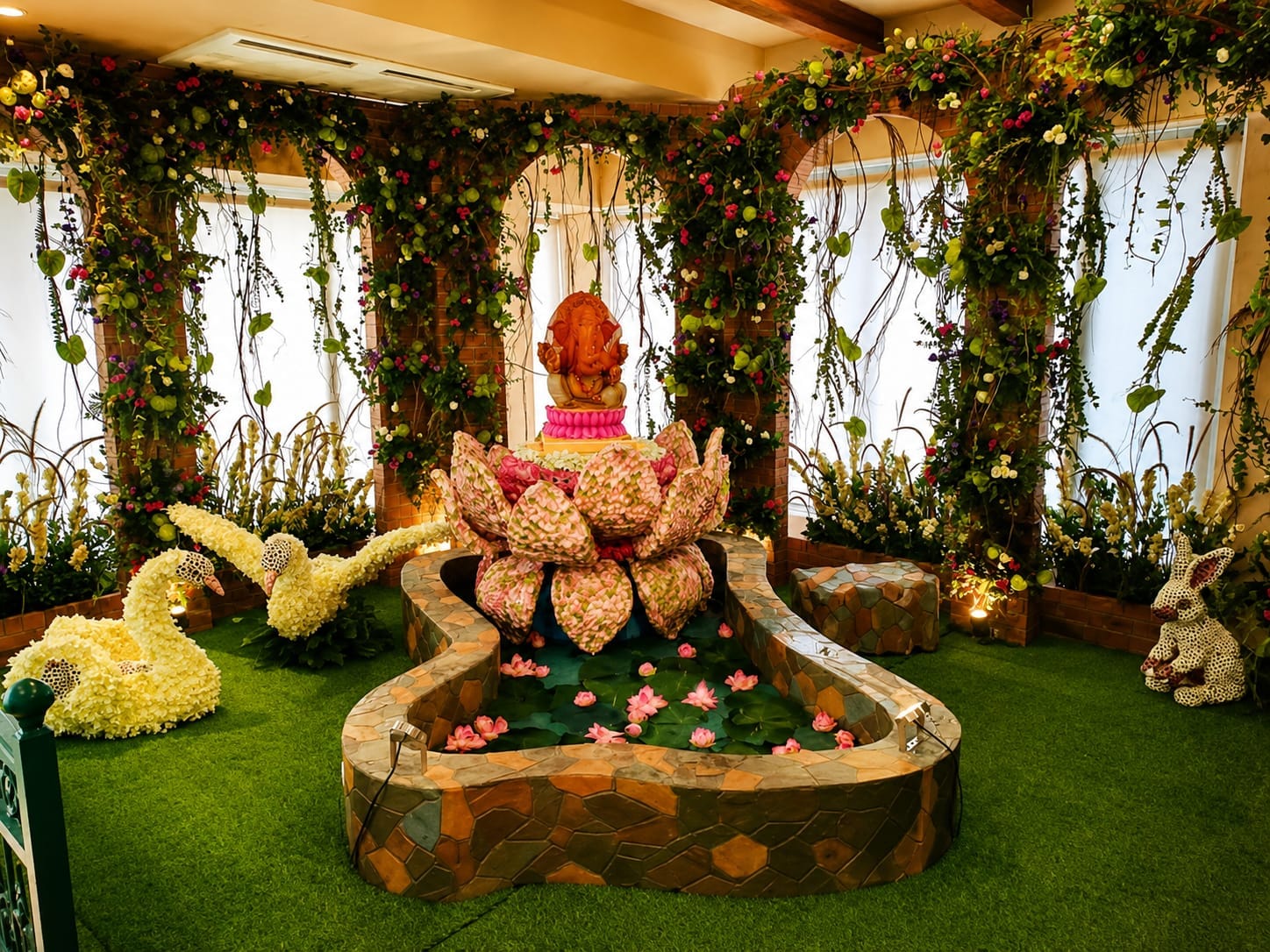
Ganpati Décor: When Grandeur Knows Where to Stop
Ganpati gives us permission to be dramatic.
And, frankly, we quite enjoy that.
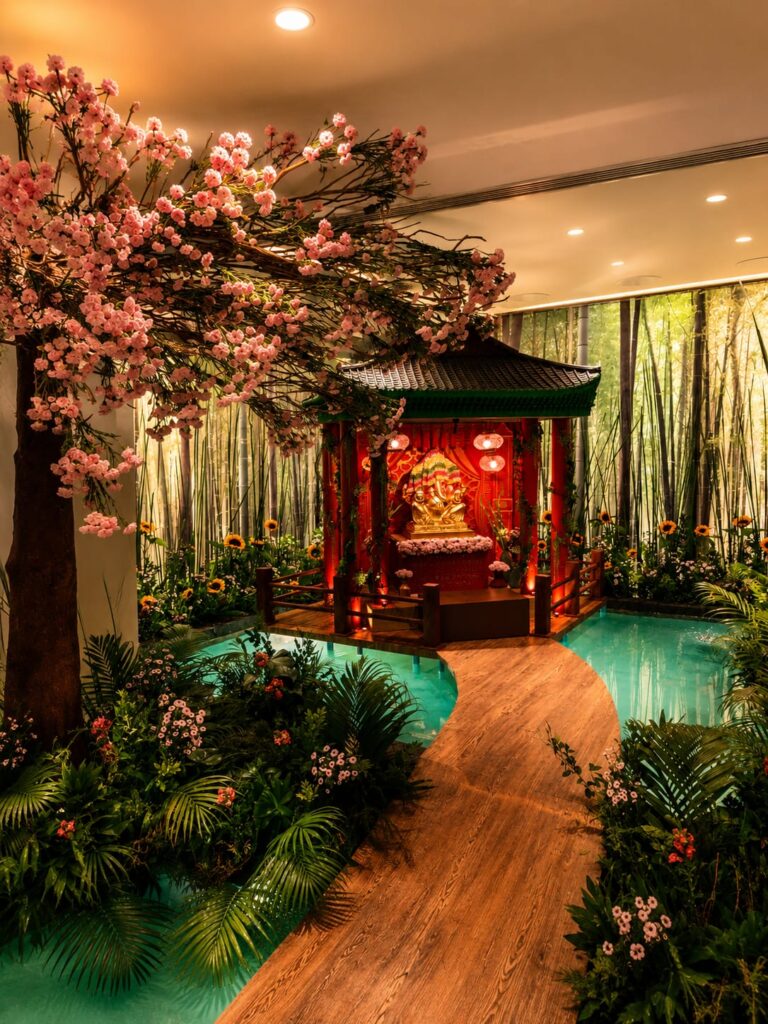
Architectural arches rising around the shrine. Layered foliage creating depth. Hanging garlands, sculptural floral forms and marigold tapestries transforming a familiar corner into something theatrical.
But there is one rather important rule:
Bappa is still the star.
Everything else exists to make His presence feel more considered.
Flowers establish scale. Foliage creates movement. Garlands frame the shrine. Colour draws the eye. Structure gives the installation its architecture.
The décor creates the world around Him.
It does not audition for the lead role.
That distinction matters, particularly in contemporary homes, where festive décor has to converse with the space rather than overpower it.
Traditional marigolds and fragrant mogra can sit beautifully alongside modern structures, sculptural greenery and unexpected colour palettes. Familiar festive elements can be edited and reinterpreted until they feel natural to the architecture and to the family celebrating within it.
Because tradition is not about reproducing the same picture every year.
It is about knowing what makes it meaningful and finding a beautiful way to see it again.
For one home, that might mean a floral canopy that transforms the room. For another, a restrained frame that allows the architecture to breathe. The approach changes with the space.
The flowers change. The thought behind them does not.
The result is unmistakably festive, unmistakably Ganpati, and yet not quite what one has seen before.
Which, when it comes to a home with excellent taste, is usually the point.
Janmashtami Décor: When Tradition Finds Its Softer Side
Janmashtami has a different kind of magic.
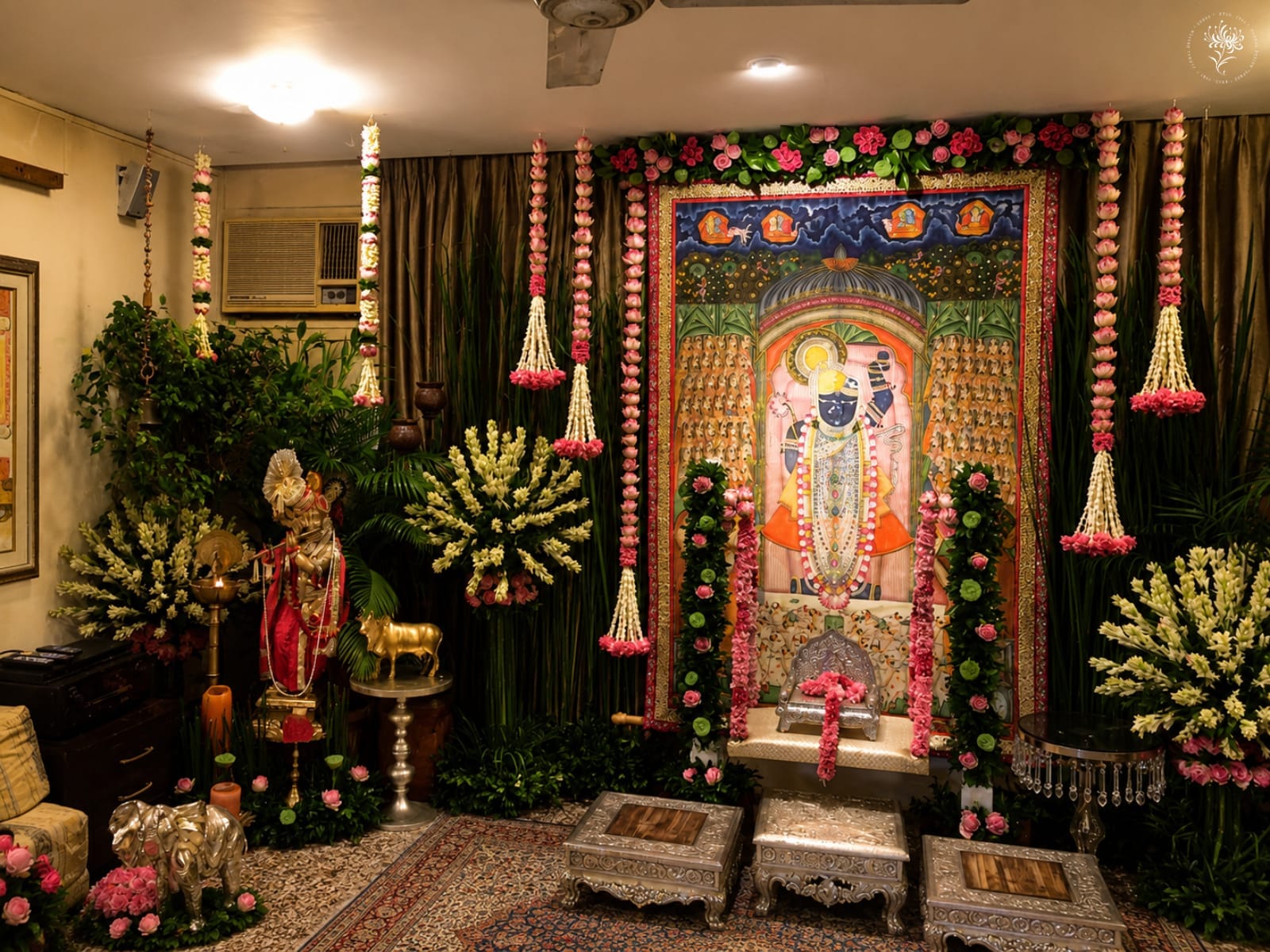
It is less about grandeur and more about feeling the nostalgia of childhood, the quiet beauty of a midnight celebration, the mischief of Krishna, the fragrance of flowers and the little details that make a familiar tradition feel alive again.
And that gives the décor a rather lovely opportunity.
Instead of overwhelming the space, let it tell the story.
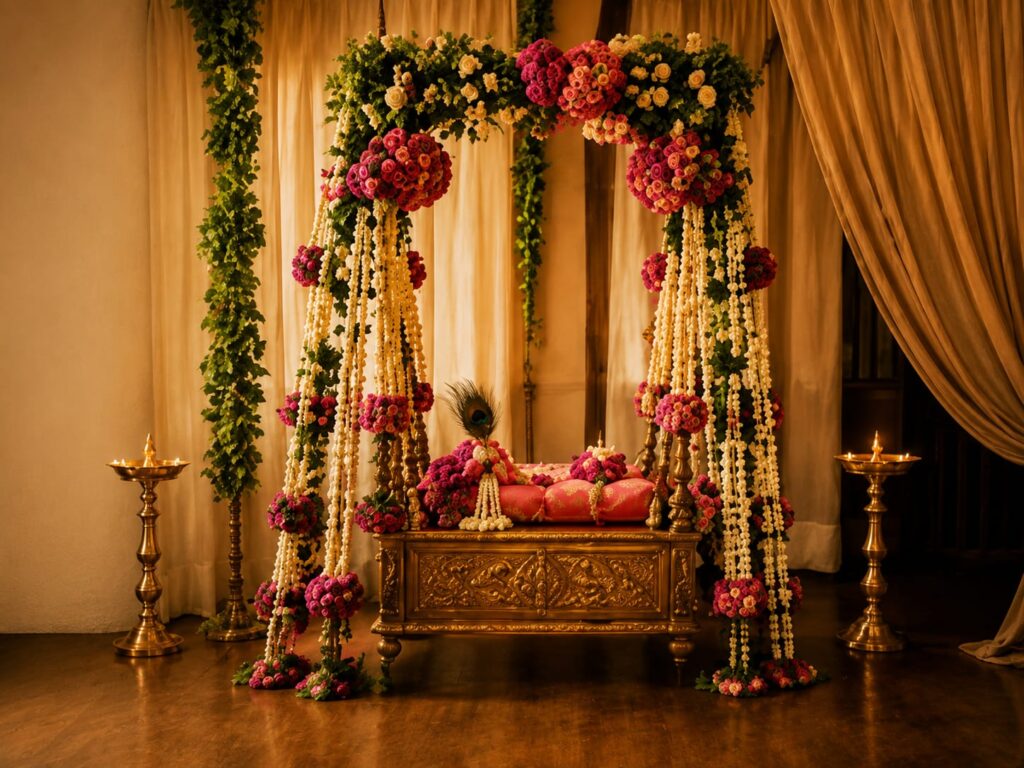
Soft garlands around the shrine. Fresh jasmine woven through delicate foliage. Lotus blooms placed with intention. A few traditional details drawn from Krishna’s world peacock-inspired tones, brass accents, butter pots, or a gentle nod to the flute interpreted with enough restraint to feel elegant rather than theatrical.
The reference can be traditional. The treatment can be entirely contemporary.
In a modern home, Janmashtami décor works beautifully when it responds to what is already there. Ivory walls, natural wood, muted greens, soft blues or warm metallics can become part of the palette rather than something to disguise beneath decoration.
The flowers should bring softness.
The foliage should create a sense of movement.
The details should invite a closer look.
Nothing needs to explain itself too loudly.
After all, Krishna’s story has never really been about taking up all the space in the room. There is playfulness in it, poetry in it, and a certain lightness that makes the celebration feel deeply human.
So perhaps the most beautiful Janmashtami spaces are not the ones that try to recreate Vrindavan in every corner.
They simply borrow a little of its spirit.
A touch of nostalgia. A little mischief. Flowers placed with care. And a celebration that feels beautifully, unmistakably yours.
Because considered festive décor is not about recreating tradition exactly as it was.
It is about knowing which parts are worth carrying forward.
Diwali Décor: When Light Does Most of the Work
Diwali has no shortage of visual drama.
There are diyas glowing at the entrance, rangoli underfoot, polished brass catching the light, flowers spilling across tables and homes opening their doors to family and friends.
But beautiful Diwali décor is not about adding everything at once.
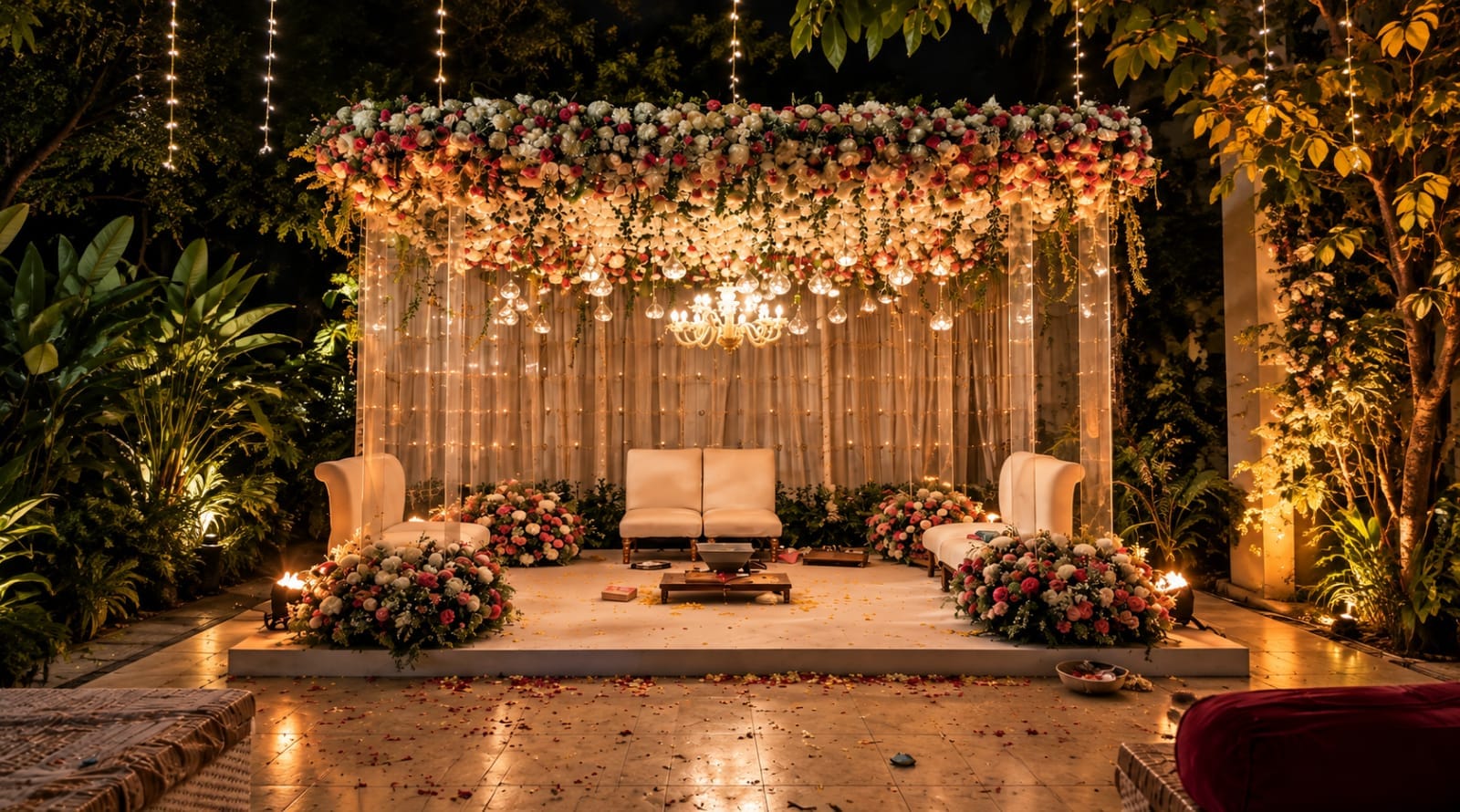
Sometimes, the most luxurious thing in a room is restraint.
For contemporary homes, some of our favourite Diwali floral décor ideas are simple but deliberate: a line of marigolds along a staircase; jasmine woven through a doorway; a floral arrangement placed beside a brass diya so that the flame becomes part of the composition; or a dining table where flowers sit low enough for conversation to continue uninterrupted.
The light does the rest.
For contemporary homes, Diwali offers an opportunity to work with contrast warm candlelight against cooler interiors, delicate flowers against stone and wood, traditional brass against clean architectural lines.
The familiar elements remain. They simply receive a little editing.
Because flowers don’t need to compete with the glow of a diya. They can frame it. Foliage doesn’t need to cover every surface. It can give the eye somewhere to rest.
And when guests arrive, the home should feel generous without feeling staged.
A little luminous. A little abundant. Entirely at ease.
That is the Diwali we like best one where tradition is present in every detail, but never at the expense of good design.
After all, the purpose of a diya is to illuminate.
The décor should know when to let it.
Onam Décor: When Nature Takes Centre Stage
Onam has a visual language all its own.
It begins close to the ground with flowers arranged in the pookalam, petals gathered into patterns, colours unfolding concentrically and a celebration that feels deeply connected to nature.
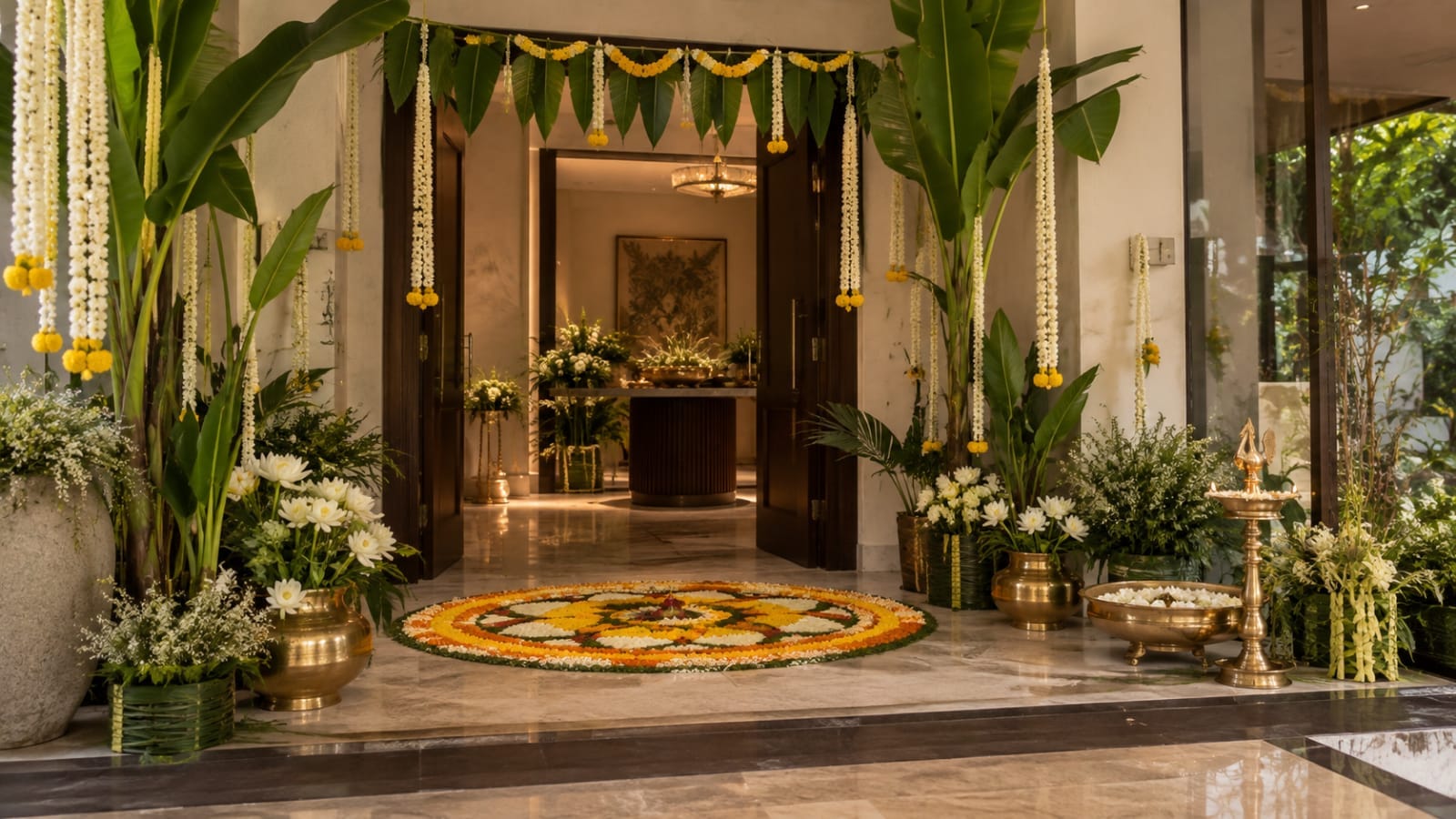
There is something wonderfully tactile about it.
Fresh petals. Green leaves. Natural textures. The quiet geometry of flowers arranged by hand.
And for a floral design studio, that simplicity is rather compelling.
Onam décor does not need to be dressed up to feel special. It needs to feel alive.
A pookalam can become the centrepiece of an entrance or courtyard, designed around the proportions of the space rather than treated as an afterthought. Floral arrangements can bring the colours and textures of Kerala indoors, while banana leaves, palms and fresh foliage introduce an unmistakable sense of place.
For a contemporary interpretation, traditional references can be pared back and composed with a designer’s eye allowing the natural beauty of the flowers to do most of the talking.
And perhaps that is what makes Onam so refreshing.
It reminds us that celebration does not always require ornament.
Sometimes, it is simply about bringing nature closer.
A circle of flowers. A home filled with people. Something beautiful made by hand.
Quite a good definition of festive joy, if you ask us.
Christmas Décor: When Warmth Becomes the Décor
Christmas has a way of making a home feel different.
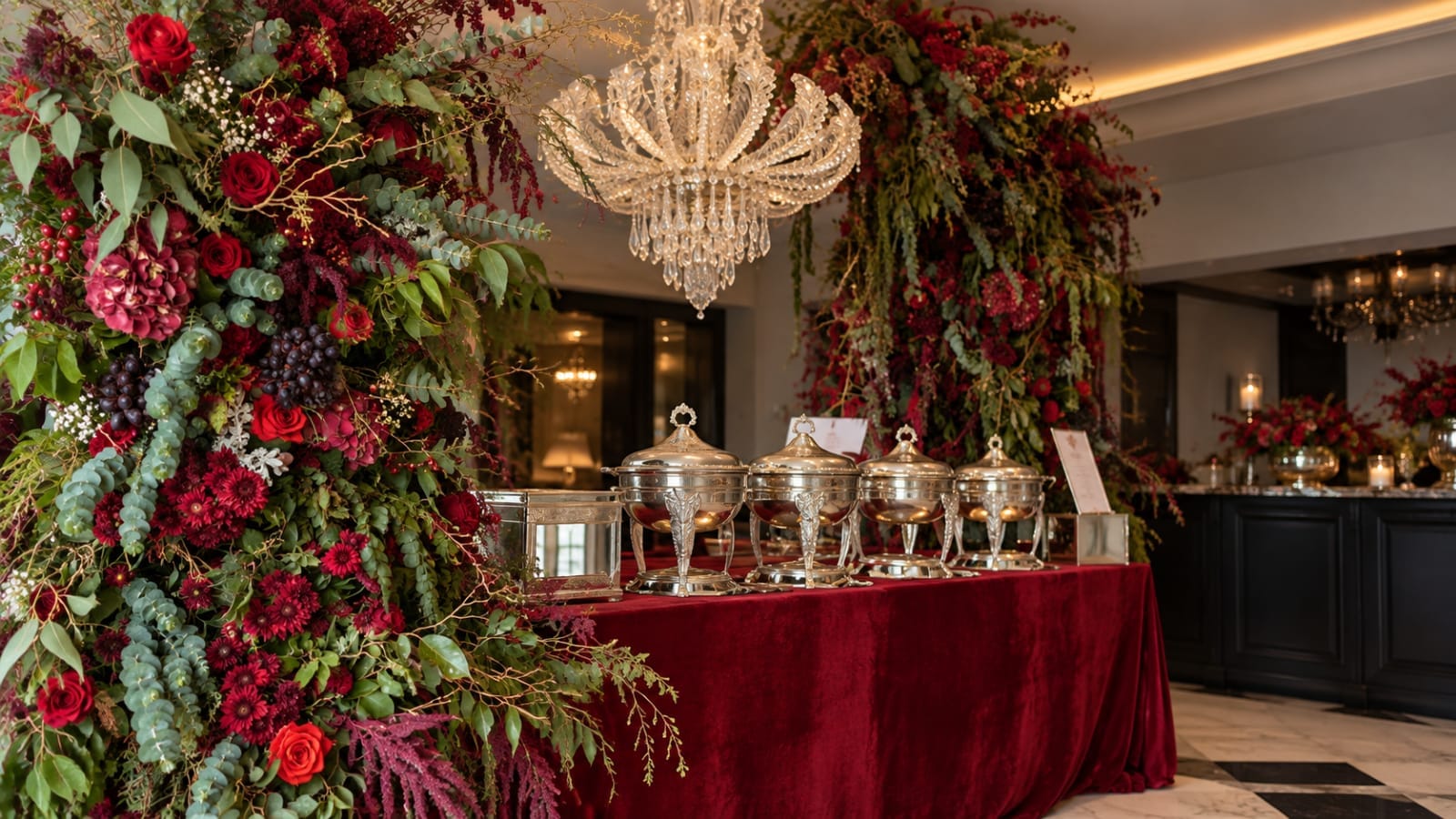
The lights become softer. Evenings stretch a little longer. Tables become places to linger. The familiar scent of greenery appears somewhere in the room, and suddenly the house feels ready for a celebration.
The temptation, of course, is to decorate everything.
We prefer to edit.
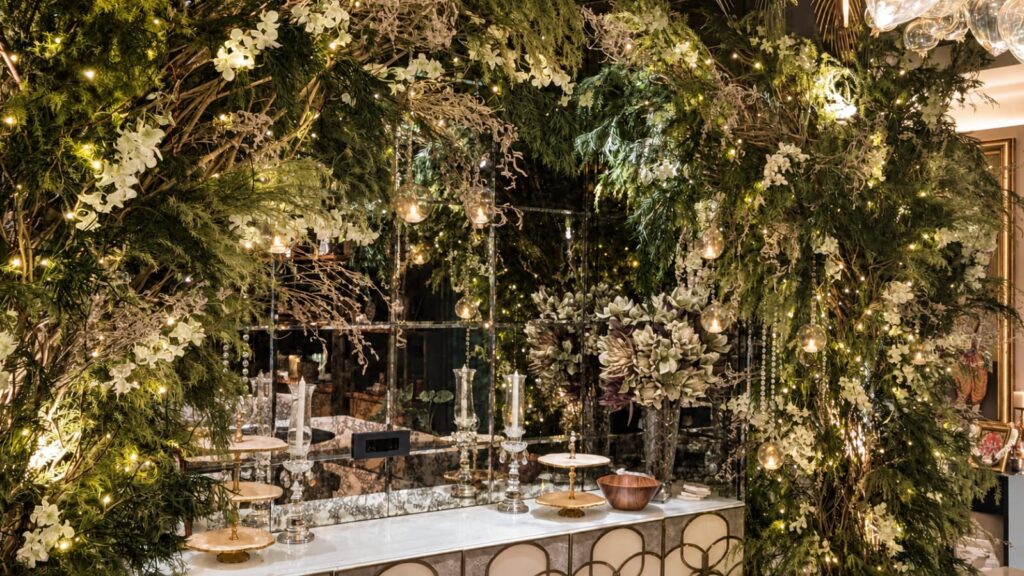
Fresh pine and seasonal foliage can bring structure and texture to a space. White flowers can soften the arrangement. Deep greens, warm neutrals and subtle metallics can create a palette that feels festive without becoming predictable.
And there is no rule that says Christmas must be red and green from floor to ceiling.
In a contemporary Indian home, the season can be interpreted through natural materials, sculptural greenery, candlelight and florals that complement the existing interiors. A mantel can become a quiet botanical composition. A dining table can carry a low arrangement that leaves room for conversation. An entrance can be framed with foliage rather than buried beneath it.
Christmas décor should make you want to stay a little longer.
That is the real luxury of it.
Not the number of ornaments. Not the height of the tree. Not how much sparkle can be persuaded onto a single surface.
It is the atmosphere.
The glow of candlelight against greenery. The scent of fresh foliage. Flowers placed where someone will notice them while reaching for another glass. A table that looks beautiful before dinner and somehow even better once everyone is seated around it.
Because the best Christmas décor doesn’t simply announce that Christmas has arrived.
It makes the home feel ready to receive it.
5 Principles for Thoughtful Festive Décor
- Start with the space, not the flowers.
Look at architecture, proportions, materials, natural light and how people actually move through the home before choosing the floral treatment.
- Give the celebration a visual language.
Let the festival guide the mood, colour and references, but interpret them through the character of the home rather than applying a fixed formula.
- Use foliage as structure, not filler.
Greenery can create height, movement, negative space and scale. It is part of the design, not something added merely to fill gaps.
- Leave room for life.
Festive décor should make space for rituals, conversations, photographs, food, children, guests and all the wonderfully imperfect things that happen at home.
- Know when to stop.
Editing is part of luxury. Removing one colour, lowering an arrangement or leaving a wall untouched can make a composition feel more effortless.
Traditional Does Not Mean Repetitive
There is a reason we keep returning to flowers like marigold and mogra.
They carry memories.
They smell like celebrations. They belong to generations of Indian homes. They have been woven into rituals, entrances, prayer spaces and family gatherings for as long as many of us can remember.
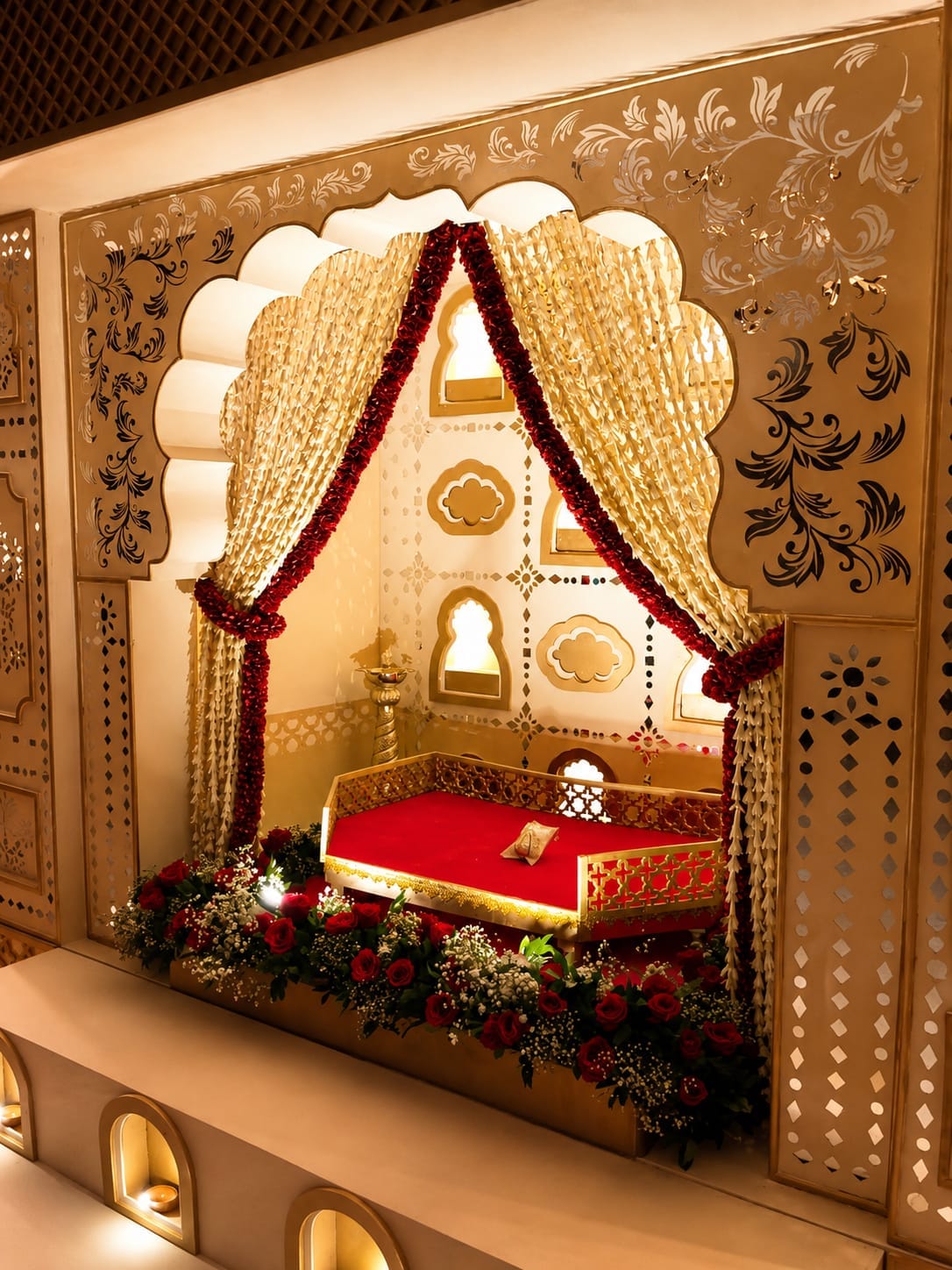
But belonging to tradition does not mean being required to recreate last year’s décor.
A marigold can become architectural.
Mogra can become minimal.
Brass can feel unexpectedly contemporary.
A familiar flower can sit against a modern interior and suddenly look entirely new.
Tradition gives us vocabulary. Design decides how we speak it.
This is where Spree’s aesthetic intelligence comes in.
We look beyond flowers to interiors, architecture, fashion, art, nature and global floral design and then bring that perspective back to the space in front of us.
The question is never simply, What is trending?
It is:
What makes sense here?
Because the most interesting festive spaces aren’t necessarily the ones doing something completely new.
They are the ones making something familiar feel beautifully unexpected.
Greenery Is Not Filler
There is a tendency to think of flowers as the important part and greenery as something added around them.
We see it differently.
Foliage gives an installation its architecture.
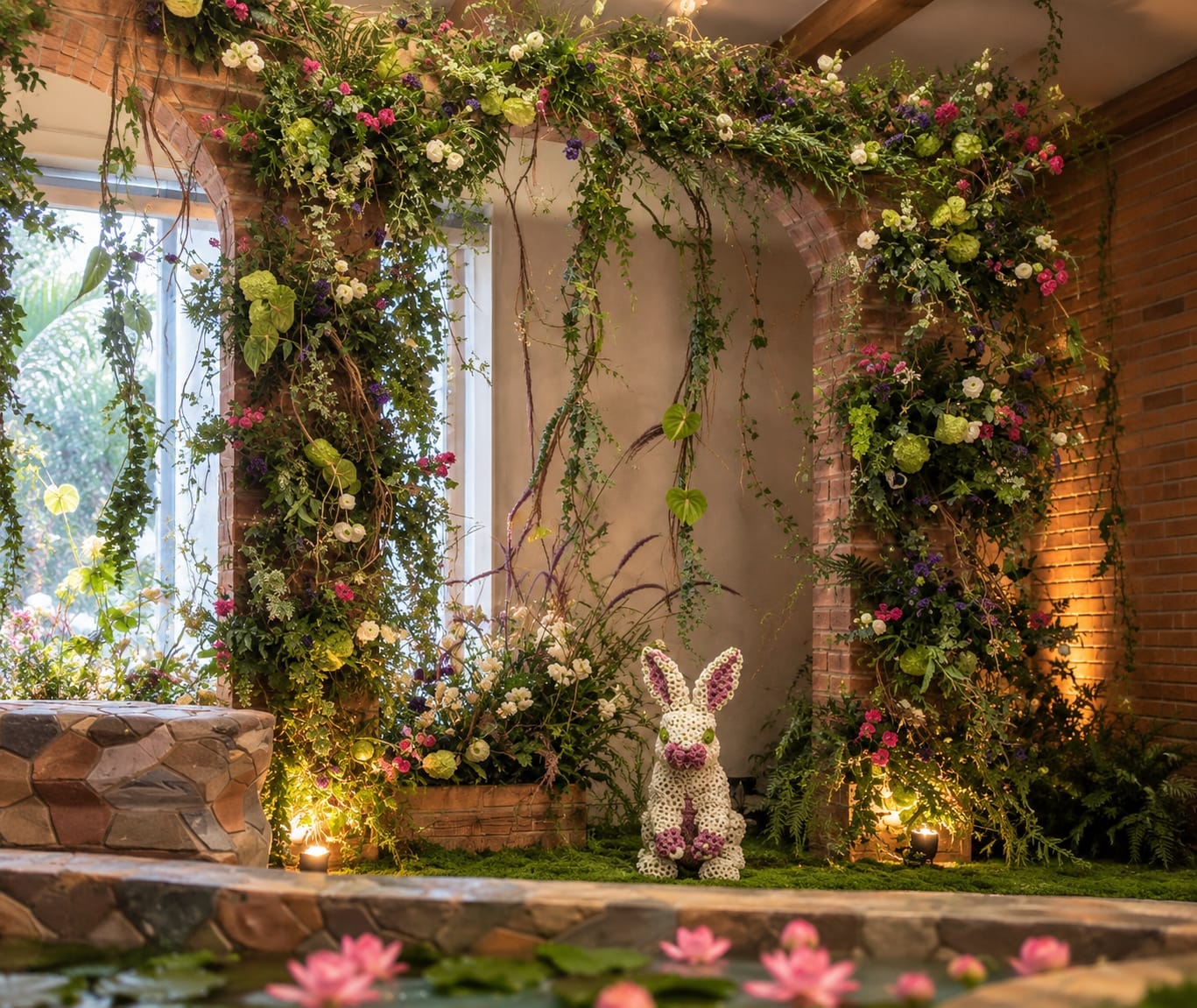
It creates height. It introduces movement. It softens edges. It creates negative space. It brings a sense of nature into the composition and gives flowers somewhere to breathe.
Banana leaves can create bold graphic lines. Palms can establish scale. Fine foliage can bring softness to a dense floral composition.
And sometimes, a beautifully shaped leaf can do what five flowers cannot.
Good design knows when the supporting cast deserves a little screen time.
Because greenery isn’t there to fill the gaps.
It is part of the design.
The Quiet Luxury of Editing
This may be the least glamorous part of floral design.
It is also one of the most important.
Removing one colour.
Lowering an arrangement.
Creating three inches of breathing room.
Moving a diya.
Leaving a wall untouched.
Choosing not to add one more garland simply because there is room for it.
These decisions rarely make it into the final photograph.
But they are often the reason the photograph looks effortless.
The editing is a luxury.
Anyone can keep adding.
Knowing what to leave out is considerably harder.
And in festive décor, where every tradition comes with its own beautiful visual vocabulary, restraint can be the difference between a space that feels considered and one that simply feels decorated.
A Beautiful Festival Still Has to Be a Home
There will be children running around.
Someone will arrive with a box of sweets.
Someone will sit on the floor.
Someone will move the flower arrangement because they need space for their phone.
And eventually, someone will ask:
“Can we actually sit here?”
Good festive design accounts for all of it.
The purpose of floral décor is not to turn a home into a showroom.
It is to make the home feel even more special while allowing life to continue inside it.
The flowers should make space for conversations, rituals, photographs, laughter and the people who make the celebration worth having.
A beautiful room is one thing.
A beautiful room people want to stay in is another.
So, What Should Your Festive Décor Look Like?
Not last year’s.
Not your neighbour’s.
Not the installation currently making the rounds on Pinterest.
And certainly not something chosen simply because it is festive.
It should look like your home, considered differently.
Your architecture.
Your traditions.
Your personality.
Your way of entertaining.
Your idea of beauty.
Because no two homes celebrate in quite the same way, there can never be one definitive Spree festive look.
A Ganpati installation may call for scale and sculptural drama. A Janmashtami celebration may ask for softness and nostalgia. Diwali may find its expression in light, flowers and restraint. Onam may bring nature and hand-crafted detail to the foreground.
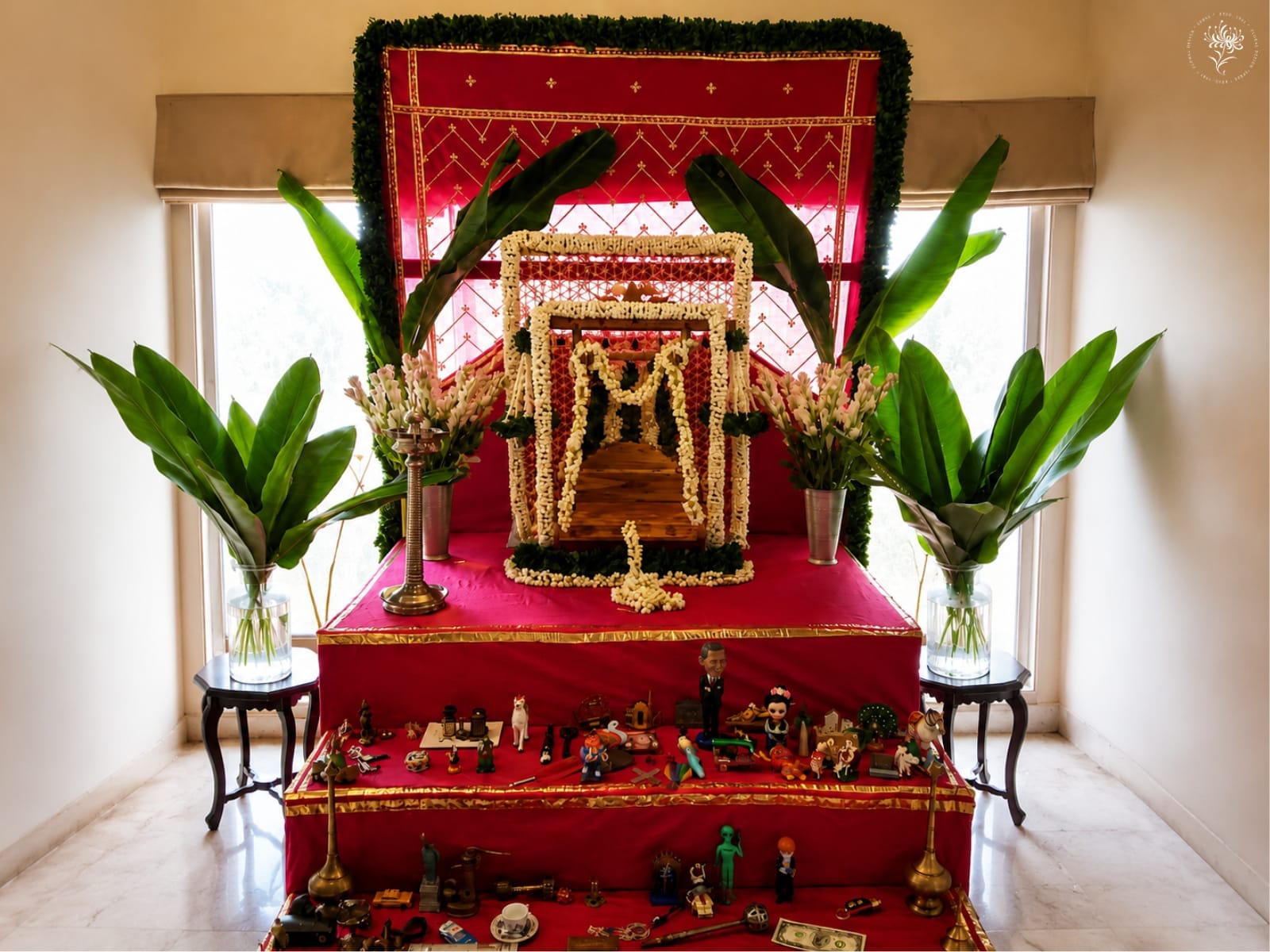
The occasion changes. The approach begins with you.
There is no single Spree festive look.
There is your Spree look.
Chosen by Those Who Know
For decades, Spree has created floral experiences for people who understand that good design is rarely about having more.
It is about having the right thing, beautifully considered.
Our work begins with flowers, of course.
But it is informed by much more architecture, interiors, art, fashion, nature and the ever-changing way people live.
Because the world of design doesn’t stand still.
Neither do we.
Our aesthetic continues to evolve, while the fundamentals remain: craft, judgement, experience and an understanding of what makes a space feel right.
Perhaps that is why our work continues to be chosen by people whose taste we admire.
People who have seen plenty, experienced plenty, and know the difference between something that is simply beautiful and something that is beautifully right.
Chosen by those who know.
Planning Your Festive Décor?
Whether it is Ganpati, Janmashtami, Diwali, Navratri, Dussehra, Durga Puja, Onam, Christmas, Eid or a celebration entirely your own, Spree creates bespoke floral décor around the space, the occasion and the people at its heart.
From intimate home celebrations to statement festive installations, Spree creates bespoke floral décor designed around your space, traditions and way of celebrating.
Because your celebration deserves more than a festive formula.
It deserves a point of view.
Tell us about your celebration.
We’ll take it from there.
Spree Floral Design
Chosen by those who know.
Frequently Asked Questions
What is festive floral décor?
Festive floral décor uses flowers, foliage and considered styling to bring the mood and traditions of a celebration into a space. For Spree, the design begins with the home and occasion rather than a fixed floral formula.
How can I decorate my home with flowers for Diwali?
Start with the architecture and existing interiors. Marigolds, jasmine, foliage and low floral arrangements can complement diyas, brass and rangoli without competing with the light. The most effective Diwali décor is often edited rather than excessive.
What flowers are traditionally used for Indian festivals?
Marigold, mogra, jasmine and lotus are among the familiar floral references used across Indian celebrations. Their treatment can change dramatically depending on the festival, space and desired aesthetic.
How can festive décor look luxurious without feeling excessive?
Use restraint. Consider proportion, scale, colour, negative space and how people use the room. A single architectural floral moment can often have more impact than decorating every available surface.
How do I choose festive décor for a modern home?
Begin with what already exists: architecture, materials, colours, light and furniture. Then reinterpret traditional festive elements so they complement the home’s character rather than disguise it